

What the ADA Tax Credit Actually Is
The Disabled Access Credit is a federal tax credit created to encourage businesses to become more accessible to people with disabilities.
In simple terms:
• It covers 50% of eligible accessibility expenses
• It applies to up to $10,250 in annual costs
• The maximum credit is $5,000 per year 
• It’s available to small businesses that:
• Earned $1 million or less in the previous year, or
• Have 30 or fewer full-time employees 
The credit is claimed annually using IRS Form 8826. 
This means accessibility isn’t just a compliance task—it can become a recurring, partially subsidized investment in your business.
⸻
What Counts as an “Accessibility Expense”
Most people think ADA compliance only applies to ramps, bathrooms, or physical modifications.
But the ADA also applies to digital experiences, including your website. 
Eligible accessibility expenses can include:
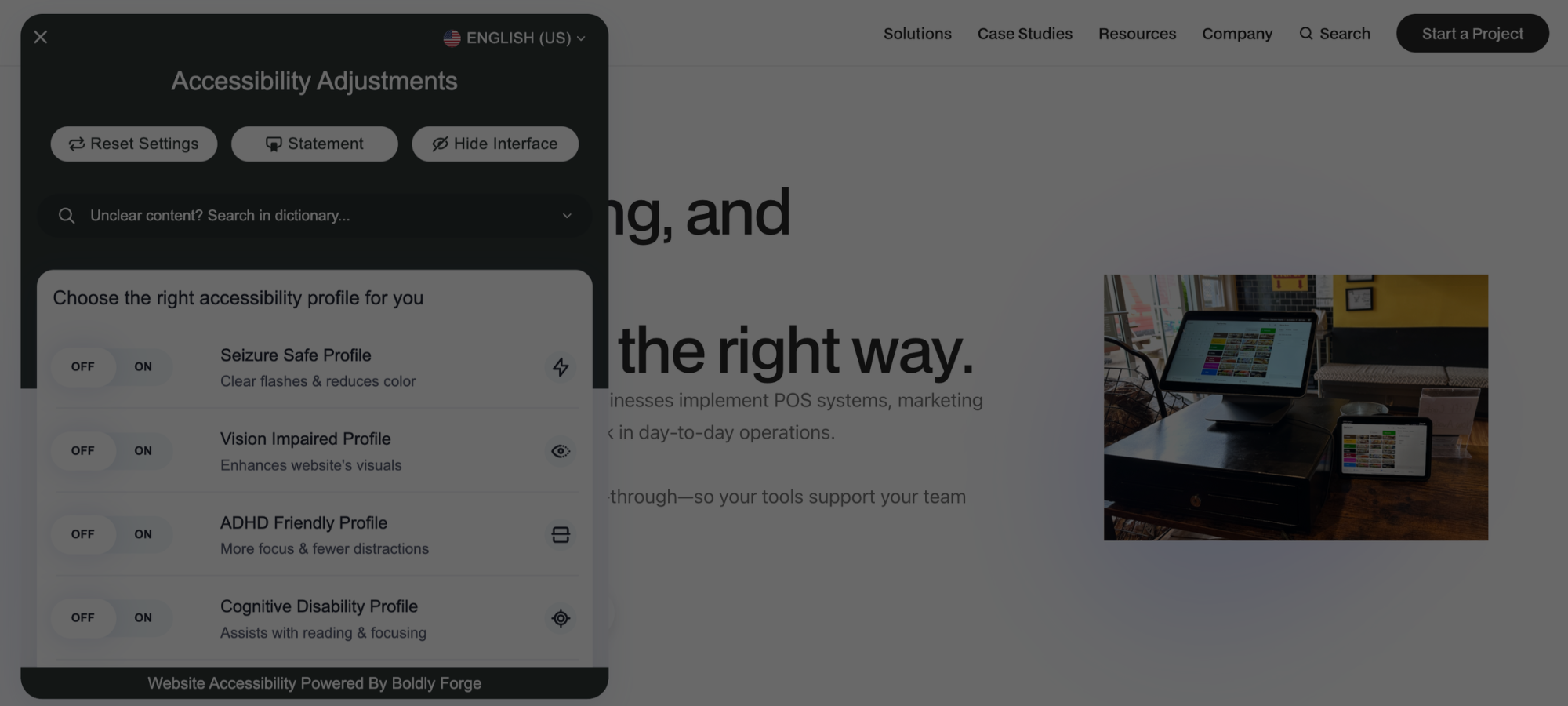
• Website accessibility tools or services
• Accessibility audits and consulting
• Assistive equipment
• Sign language interpreters
• Accessible printed materials
• Removing physical barriers
• Accessibility-related software or technology 
In other words, both your physical location and your digital presence can qualify.
⸻
A Simple Example
Let’s say a small coffee shop invests in:
• Website accessibility improvements
• Accessibility consulting
• ADA-compliant features
Total cost: $6,000
Here’s how the credit works:
1. Subtract the first $250
→ $6,000 − $250 = $5,750
2. Credit equals 50% of that amount
→ $5,750 × 50% = $2,875 tax credit
That’s nearly half the investment returned directly against the business’s tax liability. 
⸻
Why Accessibility Is More Than a Tax Strategy
The tax credit is helpful—but it’s not the real reason accessibility matters.
Accessibility:
• Expands your customer base
• Improves usability for everyone
• Reduces legal exposure
• Enhances SEO and conversion rates
• Builds trust with your community 
Think of accessibility as the digital equivalent of installing a ramp at your front door. It doesn’t just help one group—it makes your business more welcoming and easier to use for everyone.
⸻
The Problem: Most Businesses Don’t Know Where to Start
In reality, most small businesses face one of three problems:
1. They’ve never heard of the tax credit.
2. They assume accessibility is expensive or complex.
3. They don’t have a technical partner they trust to implement it.
So the credit sits unused, year after year.
⸻
How Boldly Forge Helps Businesses Actually Use This Credit
At Boldly Forge, we work with restaurants, retailers, and hospitality brands every day. Most of them have:
• Outdated or inaccessible websites
• Ordering flows that aren’t inclusive
• Marketing systems that ignore accessibility
• No idea the ADA tax credit even exists
Our approach is simple:
We make accessibility part of the system—not an afterthought.
That means:
• Building or upgrading accessible websites
• Implementing accessibility tools and workflows
• Integrating accessible online ordering
• Aligning everything with ADA and WCAG guidelines
• Helping you document eligible expenses for the credit
Instead of treating accessibility like a legal checkbox, we treat it like a growth strategy—because that’s what it is.
And for many small businesses, the tax credit can cover a meaningful portion of the cost.
⸻
Who This Matters Most For
You may qualify for the ADA tax credit if you:
• Own a café, restaurant, or retail shop
• Run a small hospitality or service business
• Have under $1M in annual revenue
• Employ fewer than 30 full-time staff
• Are planning a website upgrade or rebuild
If that’s you, accessibility improvements aren’t just good practice—they’re partially funded by the federal government.
⸻
The Bottom Line
Accessibility is:
• A legal reality
• A growth opportunity
• A brand advantage
• And for many businesses, a tax-credited investment
But only if you actually implement it.
⸻
Start With a Simple Accessibility & Systems Audit
If you’re planning a new website, POS rollout, or marketing upgrade, we can help you:
• Identify accessibility gaps
• Estimate eligible tax-credit expenses
• Implement accessible systems
• Position your brand for inclusive growth
Boldly Forge is an accessibility-aware implementation partner—not just a web builder or POS installer.
We help you design systems that work for everyone.
And when possible, we help you get part of the investment back through credits like this one.